
· by Michael Blair, Nashville's Fence Company
A wood privacy fence in Middle Tennessee does not fail all at once. On the fences we get called out to, it usually starts with one thing: a post that leans after a wet spring, a section down after a storm, or boards at the bottom gone soft where mulch was piled against them. Each of those is a small fence repair on its own, and each one raises the same question: keep patching, or start over. The honest answer depends less on how the fence looks than on the condition of the posts and how many more repairs the fence has in it.
What parts of a fence can be repaired?
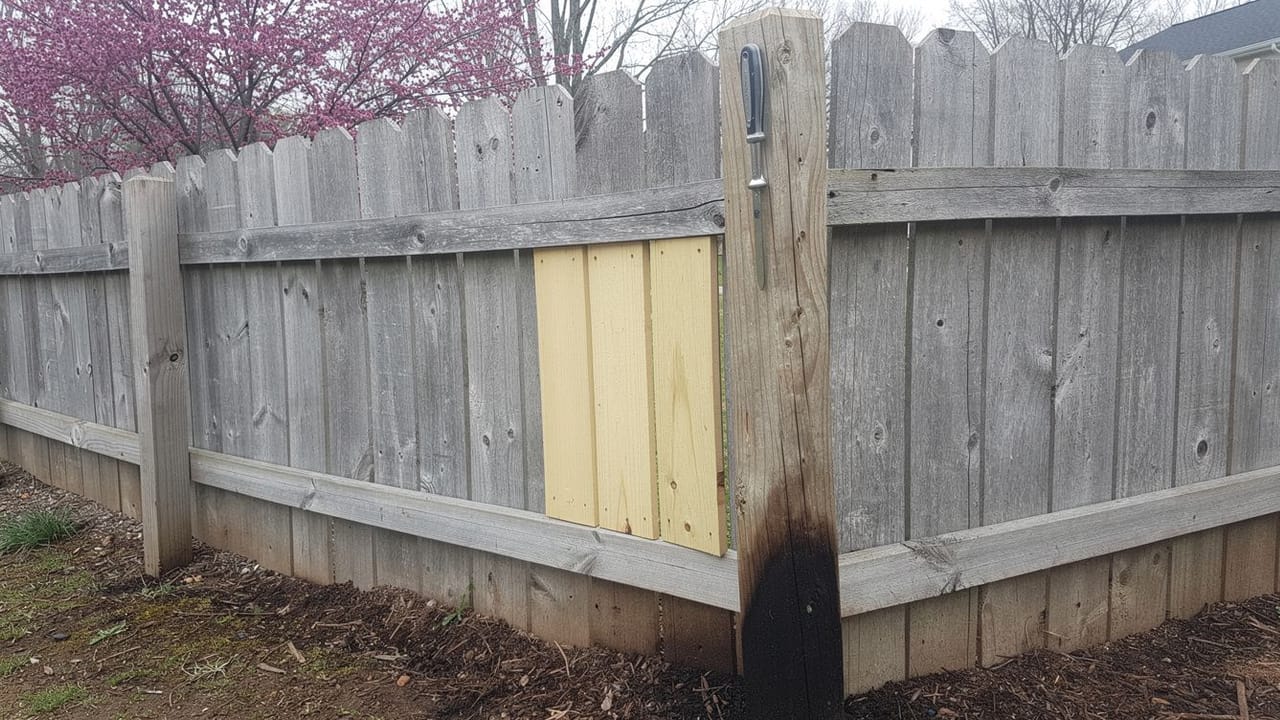
Boards and pickets are the easiest part of a fence to replace, and we hang runs of new boards on old rails all the time. Rails that have rotted at the ends we replace or sister. A gate that drags is usually a hardware and bracing fix, which our post on a gate that sags walks through. A single post that has rotted at grade can be pulled and reset, or a new post sunk beside it and the panels reattached.
One or two sections blown over in a storm, on a fence that is otherwise sound, are worth standing back up. The test is whether the posts on either side of the damage are still solid; if they are, the repair holds.
What does not
Posts are where a fence dies, because the foot of a post is the part that stays wet. The Forest Products Laboratory’s Wood Handbook chapter on biodeterioration says serious decay happens only when wood holds more water than its fiber saturation point, about 30 percent moisture on average, and that dried wood gets that wet only from rain, condensation or contact with wet ground. On the posts we pull, the soft wood is nearly always right around the ground line. Once several posts are soft at the base, replacing them one at a time means digging beside a fence that is coming apart around each new post, and in our experience the boards between them are not far behind.
The boards tell their own story. The same chapter says heavily fissured surfaces, the look most people know as weathered wood, have generally been quite degraded by soft-rot fungi. A fence where the boards are gray, cupped and cracking across most of its length, where more than a few posts move when pushed, or where earlier repairs have left a patchwork of new and old boards is one we would call past the point where another repair buys much. Each patch on that fence looks worse than the last and costs about the same.
Rot is easy to find once you know where to look. The Wood Handbook describes some decayed wood as spongy and some as brown and crumbly, and either kind gives under a screwdriver. A post that rocks has lost its grip at the base, to rot or to a shallow set, and our post on why fence posts lean covers the second.
- Push each post at the top: if it moves, the base has gone soft or loose
- Probe the post at grade with a screwdriver: wood that is soft or crumbly there is rotting
- Count the sections that have been repaired already
- Look at the bottom rail and the board ends near the ground
When should a fence be replaced instead of repaired?
Our rough rule: if the posts are sound and the damage is confined to a few sections, repair. If more than about a third of the posts are compromised, or the repair list has grown to the point where a contractor is quoting it by the section and not by the piece, replacement is usually the better spend, because the labor of piecemeal work on a failing fence adds up to the labor of a new one without the new fence at the end.
The age of the fence tells you something too, but we would sooner read the posts than the calendar, because how long a post lasts depends on how it was treated. The Wood Handbook’s chapter on wood preservation says wood in contact with the ground that was only brushed, sprayed or dipped with preservative may last 1 to 5 years, which is why a post going into the ground should be pressure-treated. An old fence with soft posts is not a candidate for repair; it is a fence that has done its job.
If you replace, fix what killed the old one
A new fence set the same way as the old one fails the same way. We put gravel at the bottom of each hole so water can drain out of the footing, and we crown the concrete above grade so rain runs off away from the wood. The Wood Handbook states the general version of that idea: a site that is dry, or one where drainage is provided, reduces the possibility of decay. Ask for posts treated for ground contact, which the preservation chapter classes as Use Category 4, or UC4. Steel posts do not rot at all, so the question at the base goes away, though the boards hung on them still need to stay dry. Wood boards between steel posts no more than ten feet apart are among the materials Metro Nashville’s fence page lists as generally permitted.
Replacing means new holes, and every new hole is digging. Metro’s page says to contact Tennessee 811 at least three working days before starting, and the Tennessee Public Utility Commission’s damage-prevention page has the digger wait three business days for utilities to mark their lines. We make that request on every job we dig. The zoning side, height limits and corner lots included, is in our post on fence permits in Nashville.
Keep the bottom of the boards off the ground, keep mulch and soil from piling against them, and keep the fence stained; when new pressure-treated wood is ready for it is its own question, answered in our post on staining a wood fence. On most of the fences we tear out, what shortened them was water at the base, and most of it was avoidable. If you are not sure which side of the line yours is on, send us a few details and we will come and check the posts.
Sources
- USDA Forest Service, Forest Products Laboratory, Wood Handbook (FPL-GTR-190, 2010), Chapter 14: Biodeterioration of Wood — Serious decay only above the fiber saturation point (average 30%), reached when dried wood meets rain, condensation or wet ground; heavily fissured weathered surfaces degraded by soft-rot fungi; decayed wood spongy, or brown and crumbly; a dry or drained site reduces decay
- USDA Forest Service, Forest Products Laboratory, Wood Handbook (FPL-GTR-190, 2010), Chapter 15: Wood Preservation — UC4 is the use category for wood in ground contact; brushed, sprayed or dipped preservative gives a service life of 1 to 5 years in ground contact
- Metro Nashville Codes, Building Permits Central: I Want to Build a Fence — Wood, vinyl, steel or aluminum slats between steel, wood or vinyl posts no further than ten feet apart are generally permitted; contact Tennessee 811 at least three working days before starting
- Tennessee Public Utility Commission, Underground Utility Damage Prevention — After a locate request, wait three business days before excavating while operators mark their facilities
FAQ
Repair a Few Panels or Replace the Whole Fence — questions
How many bad posts before a fence should be replaced?
There is no fixed number. Our rough line is about a third: once more than a third of the posts move or are soft at grade, replacing them one at a time costs close to a new fence without producing one. A few bad posts on an otherwise solid fence are worth resetting.
Can new boards go on old fence posts?
Yes, if the posts and rails are sound. Reboarding a fence with good posts is a common repair for us, and it buys the fence several more years. On posts that are rotting at the base, new boards are money spent on a fence that is likely to lean before long.
Why do fence posts rot at the ground first?
Wood decays only when it is wet enough, above about 30 percent moisture according to the Forest Products Laboratory’s Wood Handbook, and dried wood gets that wet from rain or from contact with wet ground. The foot of a post is the part in contact with the ground. We set posts on gravel, crown the concrete above grade, keep soil and mulch off the wood and use posts treated for ground contact. Steel posts do not rot, though the boards on them still need to stay dry.
How do you repair a rotted fence post?
Pull it and set a new one, or sink a new post beside it and reattach the panels, which works when the fence around it is sound. Probe the neighboring posts at grade with a screwdriver first. If several are soft, replacing them one at a time means digging beside a fence that is coming apart around each new post.