
· by Michael Blair, Nashville's Fence Company
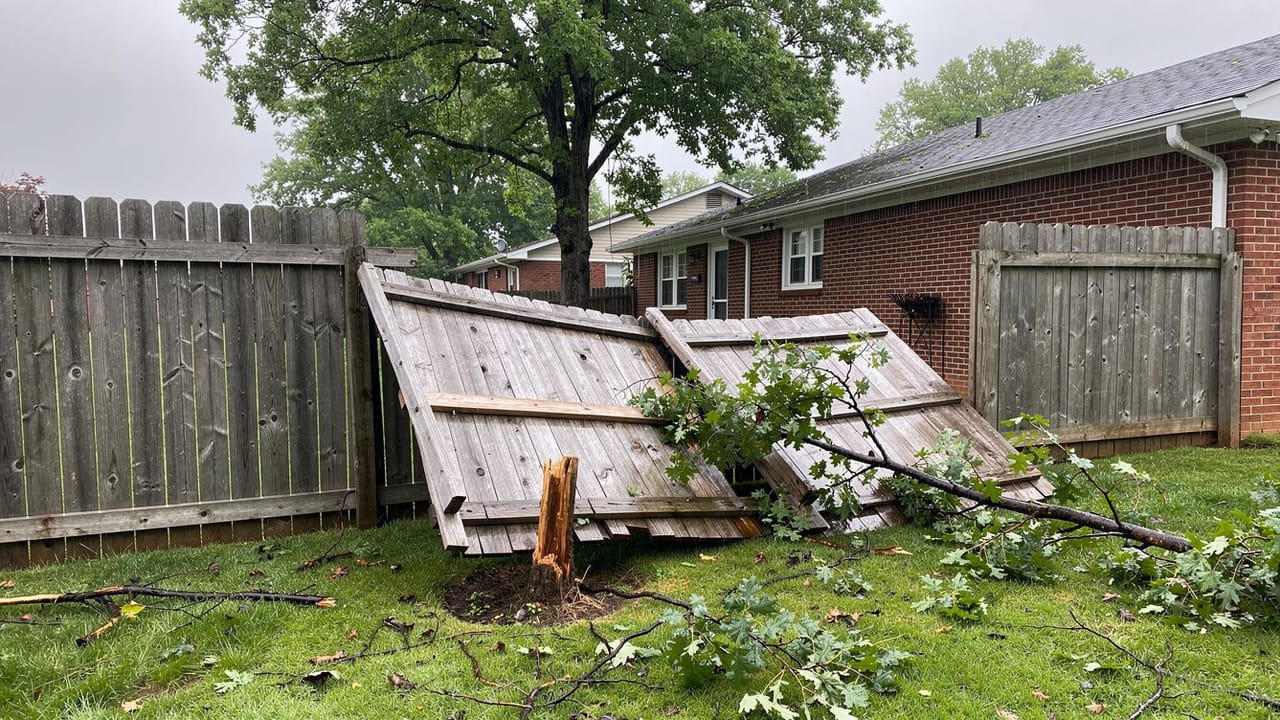
Some of the calls we get after a spring storm in Middle Tennessee are about a few sections of privacy fence lying in the yard, pushed over by wind or crushed by a limb. The question that follows is whether insurance pays to put it back. There is no single answer for every homeowner, because it sits in the policy: what caused the damage, which coverage the fence falls under, the deductible and the age of the fence all shape what comes back, and a tree from next door raises a question of its own.
Where a fence sits in the policy
Start with the policy itself. The Tennessee Department of Commerce and Insurance’s page on actual cash value and replacement cost tells homeowners to read their policies and to take anything unclear to an agent, a broker or the department. The first thing to ask is which coverage the fence falls under: whether it is grouped with the shed and any detached garage as a structure apart from the house, and whether that coverage carries a limit of its own. On a long run of new ornamental aluminum or a large property, set that limit against what a new fence would actually cost.
The policy also says whether that coverage pays replacement cost or actual cash value. TDCI explains that actual cash value pays the replacement cost minus depreciation, which it describes as wear and tear or age, while replacement cost pays what the structure would cost in today’s dollars and will generally pay more. An older wood fence flattened by wind loses part of its value to depreciation under actual cash value, and that one line can decide whether a claim is worth making. Even under replacement cost, TDCI notes that an insurer may pay the actual cash value first and the difference once you send a receipt. All of this is better asked before a storm than after one.
What fence damage does insurance usually cover?
A policy pays for damage from the perils it covers, and that list is printed in the policy, so the cause of the damage decides most of a fence claim. Look for wind on it, and check it for falling trees, vehicles, fire and vandalism too. Flood is the one to check twice: TDCI’s consumer guide to flood insurance says most homeowners policies do not cover flood damage and only a flood policy will, and FEMA’s FloodSmart site for the National Flood Insurance Program says the same. The building coverage examples in that TDCI guide are all parts of the house, from electrical systems to water heaters, so ask a flood carrier whether a fence is covered at all.
Slow damage is the other half. Rot at the base of the posts, termites, a fence that leaned a little further every year, boards that warped and split: none of it happens in one event, and the exclusions section is where your policy says how it treats wear, insects and ground movement. We go into the leaning itself in why fence posts lean in Middle Tennessee. If the posts were already rotted through when the wind took the fence over, the rot shows at ground level, and the adjuster may ask what shape the fence was in before the storm.
- On the list of covered perils, look for: wind, a falling tree or limb, a vehicle, fire, vandalism
- In the exclusions, look for: rot, insects, wear, ground movement
- Ask your agent about: a storm that finished off a fence that was already failing
- Flood: most homeowners policies leave it out, and a flood policy may not include a fence
When the neighbor’s tree falls on it
It is natural to assume the neighbor’s insurance pays when the neighbor’s tree lands on your fence. How it is actually handled depends on the policies involved and on why the tree came down, and we would not guess at it for you. Report the damage to your own insurer, say where the tree stood and whether it looked healthy, and if it was plainly dead and the neighbor had been told so, mention that as well. Your agent can say how your policy and the neighbor’s would each treat it.
Shared boundary fences add a wrinkle. If the fence belongs to both of you, or was built by the neighbor, sort out who owns it before anyone files; our post on fences, property lines and neighbors has more on shared fences and why the arrangement belongs in writing. A survey or the original contract settles ownership faster than memory does. Where the fence really is shared, the two of you can agree to split the repair, or the owner whose side took the damage can claim and settle the rest privately.
How does the deductible affect a fence claim?
The deductible comes off the top of any payment; in TDCI’s worked example, a $1,000 deductible reduces the check by that full amount. A few blown-out panels and a broken post may cost less to repair than the deductible, so get a repair price first, then decide. Before filing for a small amount, ask your agent how a claim would bear on your renewal. TDCI’s Homeowners Insurance 101 page also explains how to get a free copy of your CLUE report, from the Comprehensive Loss Underwriting Exchange, if you want to see what is on file under your name.
If you do file, TDCI’s guide for consumers recovering after a disaster sets out the order: report the claim as soon as you can, since your policy may set a deadline for it; photograph or video the damage; make only the repairs needed to prevent further damage; and hold off on permanent repairs until the insurer has inspected and you have agreed on the cost. It also says to be ready to give the adjuster a record of improvements made before the damage, so keep the contract or receipt from when the fence went up, and photograph the storm debris and the posts at ground level before anything is moved. When the offer comes, ask the adjuster for an itemized explanation of it.
Whether a policy pays to match the sections that were not damaged varies, so ask the adjuster in writing before any work starts. New pickets next to weathered ones will not match for a season or two, and a new post dropped into an old line may not sit at the same height. When our fence repair crews rebuild storm sections, we set the new posts to the existing line and, once the new wood has dried enough, stain the repaired stretch so it blends in; staining a wood fence explains why new boards have to wait. If you want a repair price to weigh against the deductible, ask us for a free estimate.
Sources
- Tennessee Department of Commerce and Insurance, Knowing Your Insurance Policy: Actual Cash Value v. Replacement Cost (updated March 30, 2026) — Read the policy and ask agents, brokers or TDCI; actual cash value subtracts depreciation for wear and tear or age; replacement cost generally pays more; insurers may pay actual cash value first and the difference on a receipt; the $1,000 deductible example
- Tennessee Department of Commerce and Insurance, Homeowners Insurance 101 — How to get a free copy of a CLUE (Comprehensive Loss Underwriting Exchange) report
- Tennessee Department of Commerce and Insurance, A Consumer’s Guide to Flood Insurance (2022) — Most homeowners policies do not cover flood damage; only a flood policy does; building coverage examples are parts of the house
- FEMA, FloodSmart (National Flood Insurance Program) — Most homeowners insurance does not cover flood damage
- Tennessee Department of Commerce and Insurance, Recovering. Rebuilding. Resilient. Consumer Resources After a Disaster (2022) — File promptly and within any policy deadline; photograph the damage; prevent further damage; no permanent repairs before inspection and agreement; record of prior improvements; itemized settlement explanation
FAQ
Does Homeowners Insurance Cover a Fence — questions
Does homeowners insurance cover a fence blown down by wind?
It can, if wind is among the perils your policy covers and the fence falls under one of its coverages, such as one for structures apart from the house. What comes back depends on the deductible and on whether that coverage pays replacement cost or actual cash value, which subtracts depreciation for age and wear.
Who pays when a neighbor’s tree falls on my fence?
It depends on the policies involved and on why the tree came down, so there is no single answer. Report the damage to your own insurer, tell them where the tree stood and what shape it was in, and ask your agent how your policy and the neighbor’s would each handle it.
Will insurance pay to replace my whole fence after a storm?
Not necessarily, and policies differ on it. A settlement may cover only the damaged sections, which leaves new wood beside old, so ask the adjuster in writing whether matching the undamaged sections is covered before any work starts.
Who is responsible for repairing a shared fence?
Whoever owns it, and that is worth settling before anyone files a claim. A survey or the original contract answers ownership faster than memory. Where the fence truly belongs to both households, the two can agree to split the repair, or the owner whose side took the damage can claim it and settle the rest privately.